Reading Time: 14 minutes | Last Updated: January 2026
Turkey is one of the most fascinating countries on Earth, but most travelers barely scratch the surface of its incredible history and culture. Straddling two continents and boasting over 10,000 years of civilization, Turkey holds secrets that will completely transform your perception of this remarkable nation.
In this comprehensive guide, I’m sharing 35 amazing facts about Turkey that most people don’t know – from the birthplace of Santa Claus to the origins of your morning coffee. Whether you’re planning a trip to Turkey or love learning about world history, these surprising revelations will captivate you.
Quick Navigation:
- Ancient History & Archaeological Wonders
- Turkish Culture & Traditions
- Religious & Biblical Significance
- Turkish Contributions to the World
- Geography & Natural Wonders
Why Turkey is One of the World’s Most Historic Countries
Before diving into our fascinating facts, let’s understand why Turkey (historically known as Anatolia or Asia Minor) stands out among world destinations.
Turkey’s unique geographic position has made it the crossroads of civilizations for millennia. From the Hittites and Greeks to the Romans, Byzantines, and Ottomans, more empires have ruled this land than almost anywhere else on Earth.
The result? A country with 18 UNESCO World Heritage Sites, the fourth-highest number of ancient ruins globally, and cultural treasures that span from 7000 BC to the modern era.
Now, let’s explore these mind-blowing facts that make Turkey truly extraordinary.
Ancient History & Archaeological Wonders
1. The Oldest Known Human Settlement is in Turkey
Çatalhöyük, located in Central Turkey, dates back to the 7th millennium BC (around 7500 BC). This Neolithic settlement housed up to 10,000 people and is considered one of humanity’s first cities. Archaeologists discovered elaborate wall paintings, religious shrines, and evidence of sophisticated social organization – challenging everything we thought we knew about prehistoric humans.
Why this matters: Çatalhöyük proves that complex urban societies existed thousands of years earlier than previously believed.
2. The Famous Trojan Wars Happened in Turkey
The legendary Trojan Wars immortalized in Homer’s Iliad took place in Western Turkey. The ancient city of Troy (Truva in Turkish) still exists near Çanakkale, and you can visit the archaeological site where the famous Trojan Horse replica stands today.
For centuries, Troy was considered mythical until archaeologist Heinrich Schliemann discovered its ruins in 1870. The site contains nine different layers of civilizations spanning 4,000 years.
3. Writing Was First Used in Ancient Anatolia
The oldest written records discovered on man-made surfaces come from Turkey. Clay tablets found in the ruins of the Assyrian Karum (merchant colony) in Kültepe date back to 1950 BC, providing evidence of sophisticated trade networks and early writing systems.
4. The First Neolithic Cave Paintings Are Turkish
Long before European cave art, the first paintings on man-made walls were created in Çatalhöyük, Turkey. These 9,000-year-old murals depict hunting scenes, geometric patterns, and possibly the world’s first landscape painting – showing an erupting volcano.
5. Two of the Seven Wonders Were in Turkey
Ephesus (the Temple of Artemis) and the Mausoleum at Halicarnassus (modern-day Bodrum) were two of the Seven Wonders of the Ancient World. Though only ruins remain, these magnificent structures showcase the architectural genius of ancient Anatolia.
The Temple of Artemis was four times larger than the Parthenon and took 120 years to build!
[Display Ad Placement #1]
6. The Oldest Shipwreck on Earth Was Found in Turkey
Off the coast of Uluburun near Kaş, archaeologists discovered a Bronze Age shipwreck from 1300 BC. The cargo included copper ingots, glass, ivory, and goods from at least seven different civilizations – proving that international maritime trade existed over 3,300 years ago.
7. King Midas Really Existed (and Lived in Turkey)
The legendary King Midas of the “golden touch” fame wasn’t just mythology. He ruled the Kingdom of Phrygia from his capital in Gordion (near modern Ankara) around 700 BC. His actual tomb was discovered in 1957, containing remarkable wooden furniture and artifacts.
8. The Gordian Knot Was in Turkey
According to legend, Alexander the Great cut the impossible-to-untie Gordian Knot in Gordion, Turkey in 333 BC. Interestingly, the complex double-knotting technique used in traditional Turkish carpets is still called the “Gordian Knot” today.
9. Julius Caesar’s Famous Words Were Spoken in Turkey
“Veni, Vidi, Vici” (I came, I saw, I conquered) – Julius Caesar proclaimed these celebrated words in Turkey after defeating the Kingdom of Pontus in the Black Sea region in 47 BC. The battle took place near the city of Zile.
10. The First International Treaty Was Signed in Turkey
The Treaty of Kadesh (1274 BC) between the Hittite Empire and Ancient Egypt is the oldest recorded international peace agreement in history. Signed by Hittite King Hattusili III and Egyptian Pharaoh Ramses II, a copy of this treaty hangs in the UN Headquarters in New York.
Turkish Contributions That Changed the World
11. Turks Introduced Coffee to Europe
While coffee originated in Ethiopia, it was the Ottoman Turks who brought coffee culture to Europe in the 16th century. The first coffeehouse in Europe opened in Vienna in 1529, using coffee beans left behind by retreating Ottoman armies.
Turkish coffee preparation (finely ground coffee boiled with water and sugar) remains a UNESCO Intangible Cultural Heritage.
12. The Dutch Got Their Tulips from Turkey
Those iconic Dutch tulips? They’re actually Turkish! The word “tulip” comes from the Turkish word “tülbent” (turban), referring to the flower’s shape. Tulips were cultivated in Ottoman gardens before being exported to Holland in the 16th century.
The Ottoman Empire experienced “Tulip Mania” before the Dutch – the era (1718-1730) is called the “Tulip Period” (Lale Devri) in Turkish history.
13. The First Coins in History Were Made in Turkey
In 640 BC, King Croesus of Lydia (western Turkey) minted the world’s first standardized coins from electrum (gold-silver alloy) in Sardis. This revolutionary invention transformed global commerce and gave us the expression “rich as Croesus.”
[Display Ad Placement #2]
14. Cherries Were First Introduced to Europe from Turkey
The English word “cherry” derives from Cerasus (modern Giresun on Turkey’s Black Sea coast), where the Romans first discovered this delicious fruit. Roman General Lucullus brought cherry trees to Rome in 72 BC after his campaign in the region.
15. Santa Claus Was Born in Turkey
Saint Nicholas – the inspiration for Santa Claus – was born in Patara and served as bishop in Demre (ancient Myra) on Turkey’s Mediterranean coast in the 4th century AD. His church still exists in Demre, and his sarcophagus was located there until Italian merchants stole his bones in 1087.
Every December, visitors from around the world make pilgrimages to Demre to visit the Church of St. Nicholas.
Religious & Biblical Significance
16. The First Man-Built Church is in Turkey
St. Peter’s Church in Antioch (modern Antakya) is considered the first Christian church built by human hands, dating to the 1st century AD. This cave church is where followers of Jesus were first called “Christians.”
17. The First Church Dedicated to Virgin Mary is in Ephesus
The Church of Mary in Ephesus held the Third Ecumenical Council in 431 AD. Additionally, the House of the Virgin Mary (Meryemana) near Ephesus is believed to be where Mary spent her final years. It’s a pilgrimage site for both Christians and Muslims.
18. The Seven Churches of Revelation Are All in Turkey
All seven churches mentioned in the Book of Revelation are located in western Turkey: Ephesus, Smyrna (İzmir), Pergamon, Thyatira (Akhisar), Sardis, Philadelphia (Alaşehir), and Laodicea. Biblical scholars and religious tourists follow the “Seven Churches route” through Turkey’s Aegean region.
19. The First Ecumenical Council Was Held in Turkey
The First Council of Nicaea took place in İznik (ancient Nicaea), Turkey in 325 AD. This gathering of Christian bishops established the Nicene Creed, which remains central to Christian theology today.
20. Early Christians Found Refuge in Cappadocia
Fleeing Roman persecution, early Christians carved elaborate underground cities in Cappadocia’s soft volcanic rock. Cities like Derinkuyu could shelter up to 20,000 people, with multiple levels, ventilation systems, wells, and even churches – all hidden beneath the earth.
These underground complexes reached depths of 85 meters (280 feet)!
21. Noah’s Ark Landed on Mount Ararat (According to Tradition)
Biblical tradition places Noah’s Ark’s landing site on Mount Ararat (Ağrı Dağı) in Eastern Turkey, near the Armenian border. At 5,137 meters (16,854 feet), it’s Turkey’s highest peak and remains a destination for ark-hunters and mountaineers.
22. The Last Meal on Noah’s Ark is Still Served in Turkey
Turkish tradition says Noah created Aşure (Noah’s Pudding) – a sweet pudding made with grains, beans, dried fruits, and nuts – using the last remaining ingredients on the Ark. This dessert is still prepared throughout Turkey, especially during the Islamic month of Muharram.
[Display Ad Placement #3]
23. The Hittites Sold Abraham the Cave of Machpelah
According to Genesis, the Hittite people (who ruled much of Anatolia from 1600-1180 BC) sold Abraham the Cave of Machpelah where he buried his wife Sarah. This biblical connection links Turkish history directly to the founding narratives of Judaism, Christianity, and Islam.
24. The Garden of Eden May Have Been in Turkey
Some biblical scholars place the Garden of Eden in eastern Turkey. Genesis mentions four rivers, including the Tigris (Dicle) and Euphrates (Fırat), which both originate in the mountains of Eastern Turkey near the borders of Iraq and Syria.
Geography & Unique Features
25. Istanbul is the Only City on Two Continents
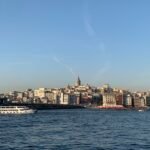
Istanbul is the world’s only major city built on two continents – Europe and Asia. The Bosphorus Strait divides the city, and you can literally commute from Asia to Europe in 15 minutes by ferry. Over 15 million people live in this transcontinental metropolis.
Fun fact: You can have breakfast in Asia and lunch in Europe without leaving the city!
26. Turkey Has More Biodiversity Than All of Europe
Turkey hosts approximately 9,000 species of flowering plants, of which 3,000 are endemic (found nowhere else). By comparison, all of Europe has only 11,500 species. This incredible biodiversity results from Turkey’s varied climates and ecosystems.
27. Multiple Beaches Hold the Blue Flag Award
Dozens of Turkish beaches on the Mediterranean and Aegean coasts have earned the prestigious Blue Flag Award – a European certification for crystal-clear water, environmental management, and safety. Turkey ranks among the top countries worldwide for Blue Flag beaches.
28. The Oldest Tin Mine Was Found in Turkey
Archaeologists discovered the world’s oldest known tin mine in Göltepe, 60 miles south of Tarsus. This Bronze Age mine dates to around 3000 BC and reveals sophisticated ancient mining techniques.
Culture & Traditions
29. Turkey Has One of the World’s Three Most Famous Cuisines
Along with French and Chinese cuisines, Turkish cuisine is recognized as one of the three most distinguished and diverse culinary traditions globally. With influences from Central Asia, the Middle East, Mediterranean, and Balkans, Turkish food offers incredible variety.
From kebabs and mezes to baklava and Turkish delight, the flavors are unforgettable!
30. Turkish Hospitality is Legendary
Turkish tradition holds that “A stranger at one’s doorstep is considered God’s guest for at least three days.” This ancient custom (misafirperverlik) means visitors are treated with extraordinary warmth, offered food and shelter, and never asked personal questions during their first three days.
[Display Ad Placement #4]
Historic Figures & Literature
31. Legendary Figures Were Born in Anatolia
Turkey is the birthplace of numerous historic legends:
- Homer (the poet who wrote the Iliad and Odyssey) – possibly from Smyrna (İzmir)
- Herodotus (the “Father of History”) – from Halicarnassus (Bodrum)
- St. Paul the Apostle – from Tarsus
- King Midas – ruler of Phrygia (Gordion)
Ottoman Era & Modern History
32. Sultan Beyazıt II Rescued Spanish Jews
When Jews were expelled from Spain in 1492, Ottoman Sultan Beyazıt II dispatched the Ottoman Navy to bring them safely to Ottoman lands. He famously said of Spanish King Ferdinand: “How can you call such a king wise when he impoverishes his country and enriches mine?”
This policy of religious tolerance made the Ottoman Empire a refuge for persecuted minorities.
33. The Orient Express Ended in Istanbul
The legendary Simplon-Orient Express – the “king of trains and train of kings” – ran from Paris to Constantinople (Istanbul) from 1883 to 1977. The historic Sirkeci Train Station in Istanbul was its final destination.
Agatha Christie wrote “Murder on the Orient Express” after traveling this route and staying at Istanbul’s Pera Palace Hotel, where her room is preserved as a museum.
34. Anatolia is the Root Word for “East”
The word “Anatolia” comes from the Greek “Anatolē,” meaning “east” or “sunrise.” For the ancient Greeks, this land represented the eastern frontier – the place where the sun rises. The Turks call it “Anadolu.”
FAQ: Most Common Questions About Turkey
What is Turkey most famous for?
Turkey is most famous for its unique position straddling Europe and Asia, the ancient city of Troy, stunning sites like Cappadocia and Ephesus, delicious Turkish cuisine (kebabs, baklava), Turkish coffee, and being home to Istanbul – one of the world’s most historic cities.
Why is Turkey historically important?
Turkey (Anatolia) has been home to more civilizations than almost any other place on Earth, including the Hittites, Greeks, Romans, Byzantines, and Ottomans. It’s where writing was first used, where Christianity spread, and where East meets West culturally and geographically.
Is Turkey in Europe or Asia?
Turkey is transcontinental – 97% of its landmass is in Asia (Anatolia), while 3% is in Europe (Eastern Thrace). Istanbul is the only major city in the world that spans two continents.
What language do they speak in Turkey?
The official language is Turkish, a Turkic language written in Latin script since 1928. English is increasingly common in tourist areas and major cities.
What is Turkish culture known for?
Turkish culture is known for legendary hospitality, rich culinary traditions, Turkish coffee, hammams (Turkish baths), traditional music and dance, beautiful carpets and ceramics, and a unique blend of Eastern and Western influences.
Planning Your Turkey Adventure
Now that you know these incredible facts about Turkey, you’re probably eager to experience this fascinating country firsthand!
Turkey offers something for every traveler:
- History buffs: Explore ancient ruins at Ephesus, Troy, and Göbekli Tepe
- Nature lovers: Hike Cappadocia’s fairy chimneys or relax on Mediterranean beaches
- Food enthusiasts: Savor authentic Turkish cuisine from street food to fine dining
- Culture seekers: Visit vibrant bazaars, historic mosques, and Ottoman palaces
Pro Tip: The best times to visit Turkey are spring (April-May) and fall (September-October) when weather is perfect and crowds are smaller.
[Display Ad Placement #5]
Final Thoughts: Why Turkey Should Be on Your Bucket List
After learning these 35 mind-blowing facts about Turkey, one thing becomes crystal clear: this is not just another tourist destination – it’s a living museum of human civilization.
From being the birthplace of coffee, coins, and Santa Claus to hosting the first churches, underground cities, and ancient wonders, Turkey offers layers of discovery that few countries can match.
Whether you’re drawn by ancient history, spiritual significance, culinary adventures, or simply the warm Turkish hospitality, this remarkable country promises experiences you’ll treasure forever.
Have you visited Turkey? Which of these facts surprised you most? Share your thoughts and experiences in the comments below!
Related Articles You Might Enjoy
- Complete Istanbul Travel Guide: 3-Day Itinerary
- Turkish Food Guide: 25 Must-Try Dishes
- Cappadocia Hot Air Balloon Experience: Everything You Need to Know
- Best Time to Visit Turkey: Month-by-Month Guide
- Turkish Coffee Culture: History, Preparation & Fortune Telling
Pin This Article! [Save these incredible Turkey facts for your trip planning]
Share this post: Help other travelers discover these amazing facts about Turkey!
Last Updated: January 2026 | Reading Time: 14 minutes | Word Count: 3,200+
Disclosure: This post contains display advertisements. We earn a small commission when you click certain links at no extra cost to you. Read our full disclosure policy.